Quetzalcoatl
#primer
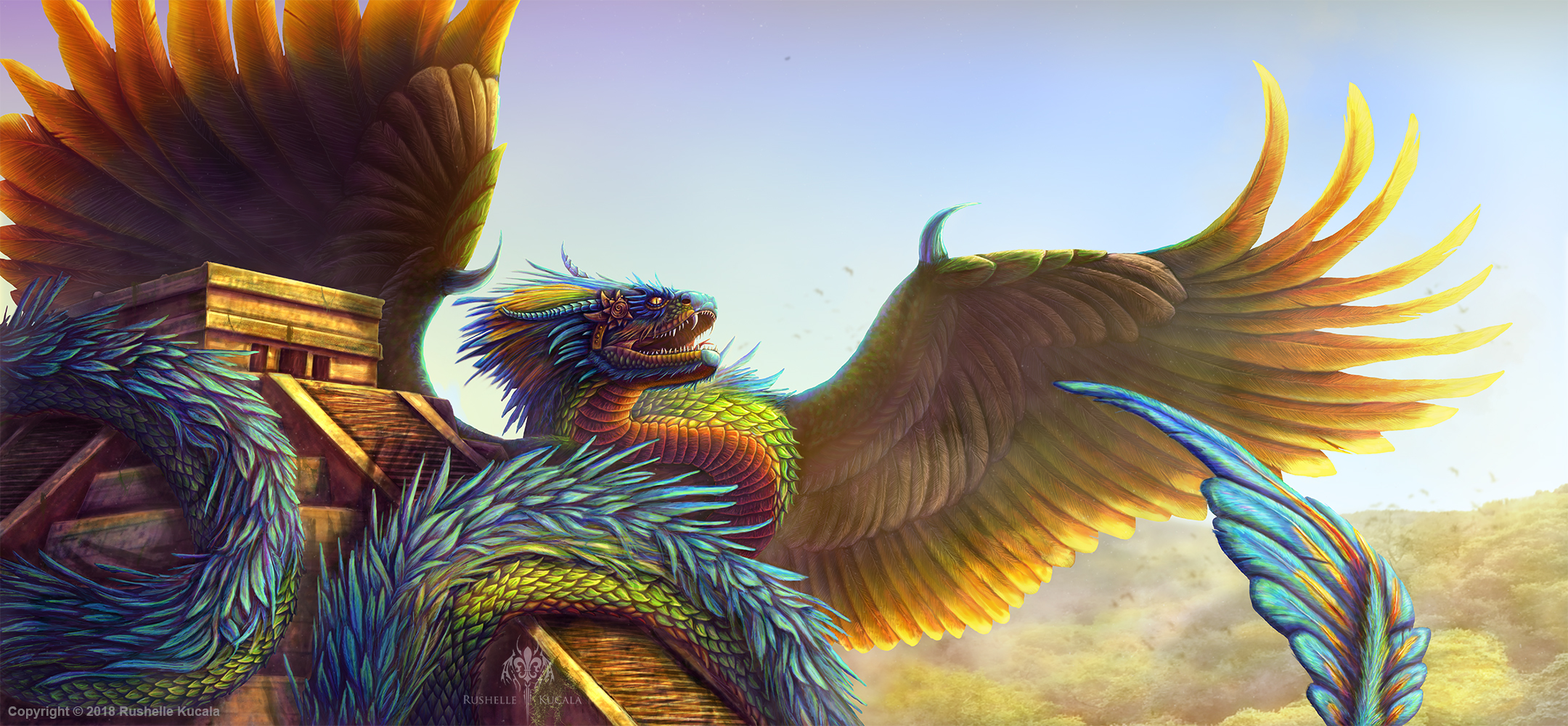 The Quetzalcoatl are the most significant and revered creatures in Carrouban - massive, feathered rainbow serpents that possess an ancient, near-immortal lifespan. They are considered the pinnacle of the world's fauna, representing both natural majesty and a deep, tangible connection to the supernatural. Because of their sacred status, it is strictly illegal in most Azcelani cultures to keep a Quetzalcoatl in captivity.
A Quetzalcoatl’s size is a direct reflection of its age; they range from modest serpents to colossal titans that dwarf the largest galleons. The largest of these serpents are followed by the Rainbow Chasers, a nomadic group of Azcelani who dedicate their lives to tracking the creatures' flight. These wayfarers typically follow the serpents on Swooping Terrors or other winged mounts, viewing the Quetzalcoatl as a living compass for spiritual guidance.
Association with the Divine
Beyond their physical majesty, in Azcelani legend Quetzalcoatl are considered the living avatars of Quetzalteotl, God of Goodness, and Renewal, and Rainbows. They are recognized as paragons of absolute goodness and refuse to associate with evildoers. This divine connection is reflected in their biology; they are believed to originate from another world, hatching from Mutite eggs only when prompted by the song of another of their kind, and their very tears are said to crystallize into Mutite upon falling to the earth.
Connection to Mutite
Quetzalcoatl have an innate mastery over Mutite. While humans must labour for weeks to shape the crystal through rhythmic sound, the Quetzalcoatl interact with the material instinctively. By emitting a melodic, musical "roar," they can instantly unmake the crystalline structure of Mutite. This power allows them to render even the most complex sculpted Mutite back into a melted, raw state, returning the material to its natural form.
The Quetzalcoatl’s ability to revert shaped Mutite to its raw form creates a fundamental metaphysical rivalry with Xōchitlāyōtl, Goddess of Beauty, Song, and Architecture. While Xōchitlāyōtl represents the harmony of order and the permanence of architecture, the Quetzalcoatl represent the cycle of renewal, often undoing the "ordered" works of man to return the world to its natural state.
In Legend
In legend, these creatures are said to be instinctively drawn to the innocence of children, often appearing to those whose hearts remain uncorrupted by the pursuit of power.
The most enduring legend of the East Azcelani tells of a time before history was recorded, when a six-year-old girl encountered the first Quetzalcoatl to ever enter the world of man. Because of her youth and absolute innocence, she forged a profound bond with the celestial serpent, who was drawn to the purity of her heart. For years, they were inseparable, a symbol of the potential harmony between humanity and the divine.
However, as the girl grew into a woman, the corrupting influence of power that affects all humans began to take hold. Realizing the serpent would fulfill her requests out of pure goodness, she began to use the creature for her own gain. Because the Quetzalcoatl did not understand the concept of evil, it could not detect her lies and was unwittingly tricked into committing terrible acts in her name.
Upon finally realizing the depth of her deception, the heartbroken serpent fled back to the heavens, vowing never again to involve itself in the messy affairs of humanity. It is said that the Quetzalcoatl’s tears of sorrow crystallized as they fell to the earth, becoming the first deposits of Mutite. This ancient betrayal explains why the serpents now remain distant, appearing only to the most innocent, and why the world is now littered with the "tears" of the avatar of a grieving god.
Notes still to incorporate
- They have feathers and scales - both said to be as durable as mutite, and inpenetrable to human weapons once they reach a certain size.